1820 Capped Bust Half Dollars : All Varieties
Lettered Edge
Mintage: 751,122
Minted at: Philadelphia (No Mint Mark)
Designer - Engraver:
John Reich
Metal Composition: 89% Silver - 11% Copper
Diameter: 32.5 mm
Mass / Weight: 13.48 grams
What This Coin Looks Like (Obverse, Reverse, Mint Mark Location, Special Features, etc.):
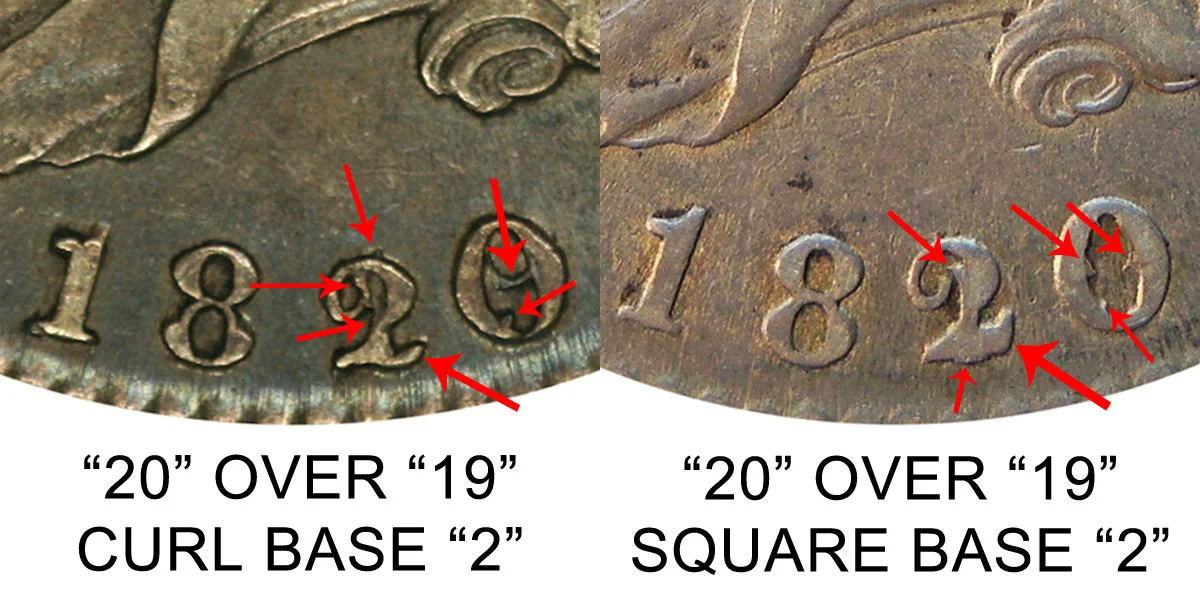
There were numerous varieties and sub-varieties of the 1820 Capped Bust Half Dollar. The first two varieties we look at are the 1820/19 overdate varieties. Both of them have an 1820 date struck over an 1819 date which resulted in a "20" over "19" overdate where parts of the underlying "19" is clearly visible within and around the "20". One sub-variety features a square base "2" with a flat and square base while the other variety features a curled and curved base as depicted above in the example comparison image.
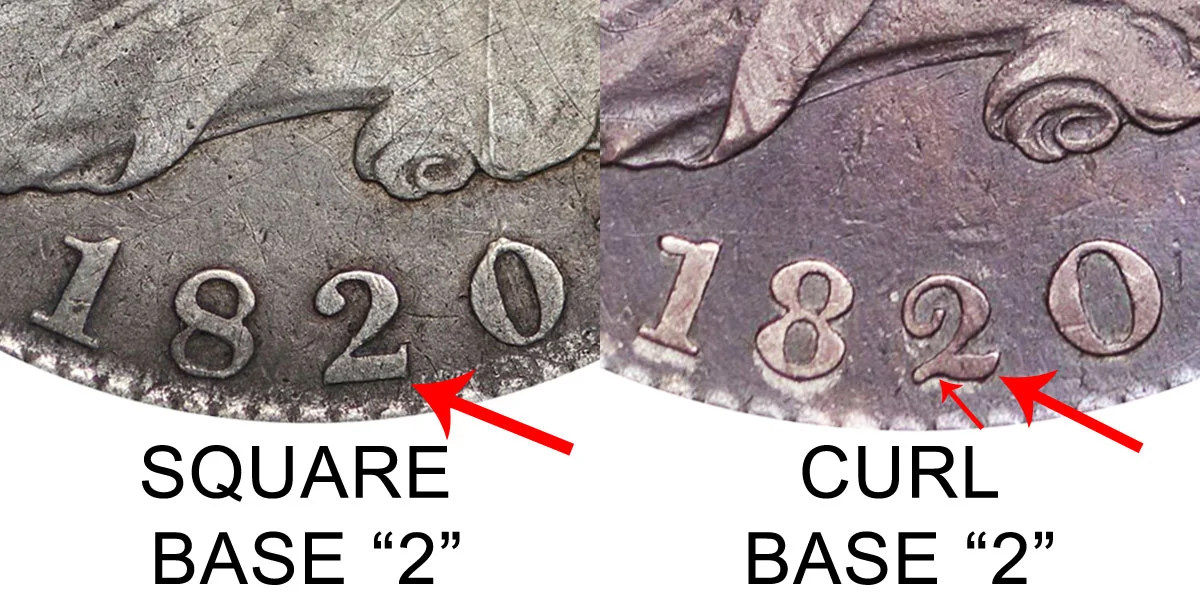
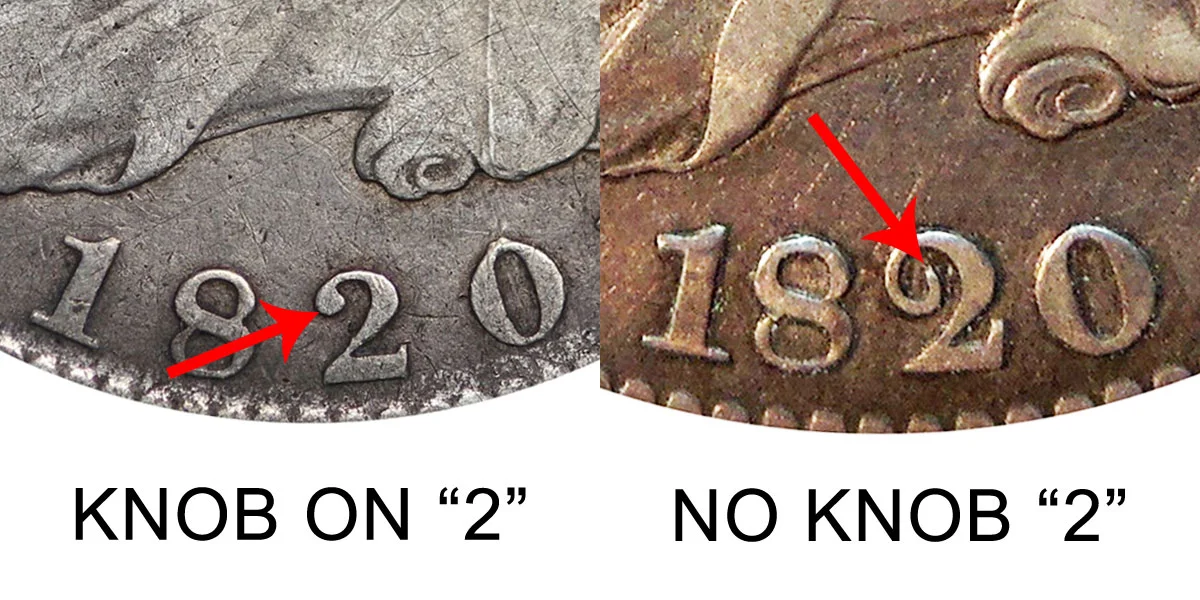
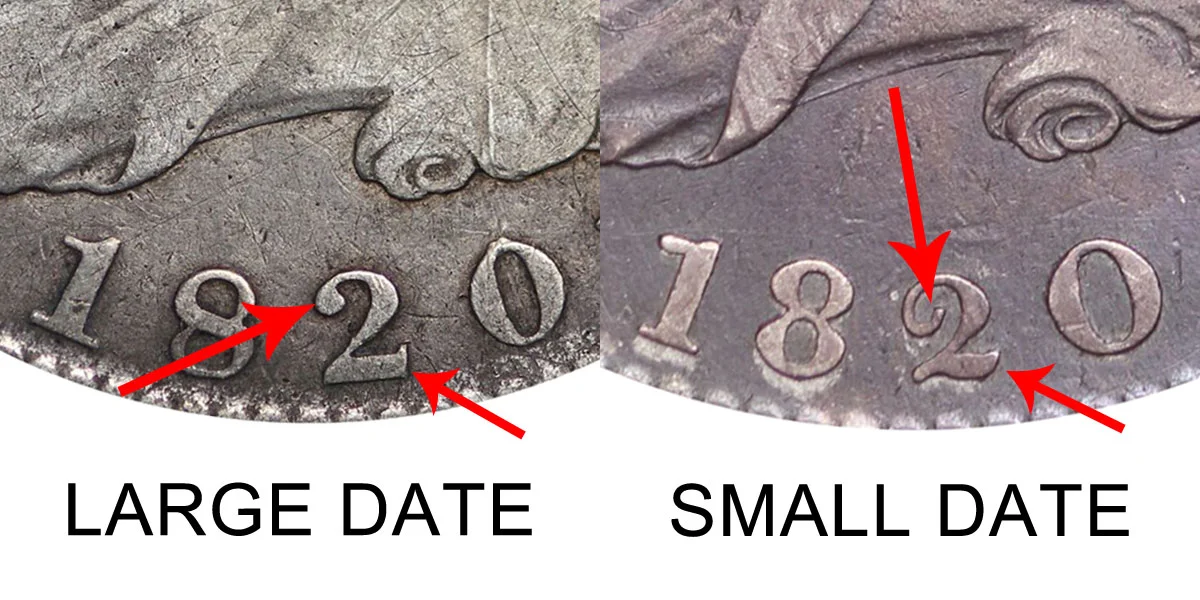
The next major variety features a normal 1820 date with three sub-varieties dealing with the style of the number "2" in the date. The first variety is the curl base "2" which again features a curled and curved base to the number "2". This variety always features a small date and no knob on the "2". The other two varieties feature a square base "2" with a flat and square base. The square base 2 variety always has a large date but has two sub-varieties as well - One variety features a knob on the upper tip of the "2" while the other variety as no knob and instead curls around and up. The difference between these varieties and sub-varieties is depicted below starting with the square base 2 vs curl base 2:
Knob 2 vs No Knob 2:
Small date vs Large Date:
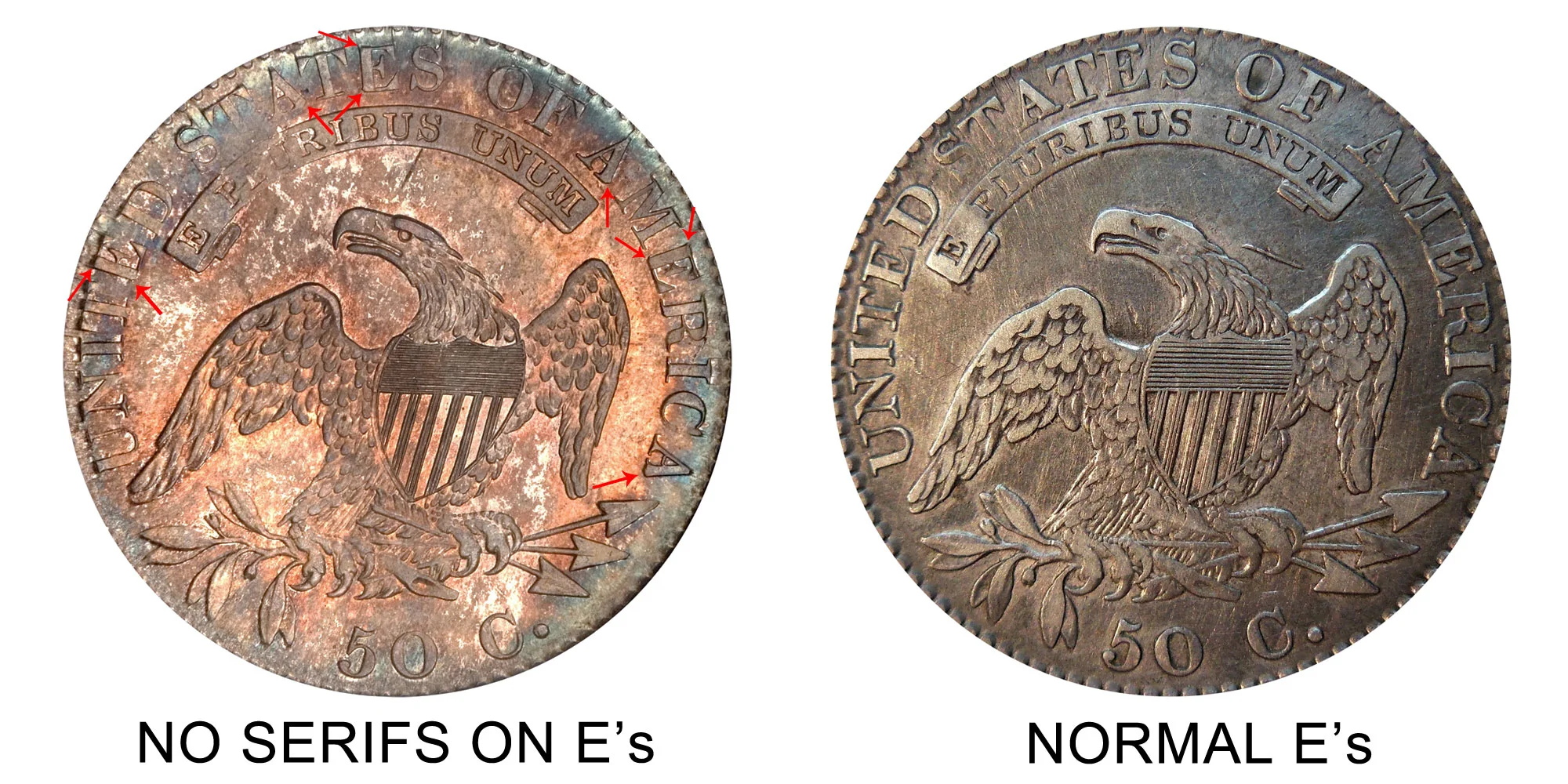
The last major variety deals with the reverse of the coin and features no serifs at the top and bottoms on the back of the letter E's in the words "UNITED STATES OF AMERICA". In addition: The letter A's also have a defect in that the bottom-right foot of the "A" is missing - so this is another easy way to identify this variety. The difference between the "No serifs on E's" reverse vs Normal reverse is depicted below in the example image:
Major Varieties:
1820/19 Capped Bust Half Dollar - Square Base 2
1820/19 Capped Bust Half Dollar - Curl Base 2
1820 Capped Bust Half Dollar - Curl Base 2 - Small Date
1820 Capped Bust Half Dollar - Square Base Knobbed 2 - Large Date
1820 Capped Bust Half Dollar - Square Base No Knob 2 - Large Date
1820 Capped Bust Half Dollar - No Serifs on E's
| Good (G-4) |
Very Good (VG-8) |
Fine (F-12) |
Very Fine (VF-20) |
Extremely Fine (EF-40) |
About Uncirculated (AU-50) |
Uncirculated (MS-60) |
Uncirculated (MS-63) |
Proof (PR-63) |
|---|---|---|---|---|---|---|---|---|
| - | - | - | - | - | - | - | - | - |
MELT VALUE: $32.61
More 1820 Half Dollar Mints/Varieties


Even More Capped Bust Half Dollar Years/Mints/Varieties


0 items found
Buy and Sell on USA Coin Book
Site Information


© 2010 - 2026 USA Coin Book. All Rights Reserved.